A portable toilet is useful when people need sanitation before a permanent sewer connection, building or washroom is ready, but delivery alone does not make the arrangement workable. By the end, you will be able to compare temporary sanitation options, estimate demand, test tank and servicing assumptions, and check whether a site can safely receive, operate and maintain the units.
Key takeaways
- Choose portable toilets when occupancy is temporary or sewer access is impractical.
- Base toilet numbers on peak attendance, event duration and alcohol service.
- Plan tank capacity around cleaning frequency, pumping access and daily demand.
- Check level access, privacy locks, handwashing and service-vehicle clearance before opening.
When does a portable toilet make more sense than a permanent or existing facility?
Use a portable toilet when occupancy is temporary, excavation or sewer connection would delay the project, or existing public toilets are too distant for expected demand. This fits construction phases, seasonal recreation areas, temporary road closures and event compounds.
| Option | Best fit | Check before choosing |
|---|---|---|
| Permanent washroom | Long-term occupancy with plumbing access | Construction time, operating cost and weather protection |
| Chemical toilet | Short construction phase or basic event use | Service-vehicle access, privacy and cleaning frequency |
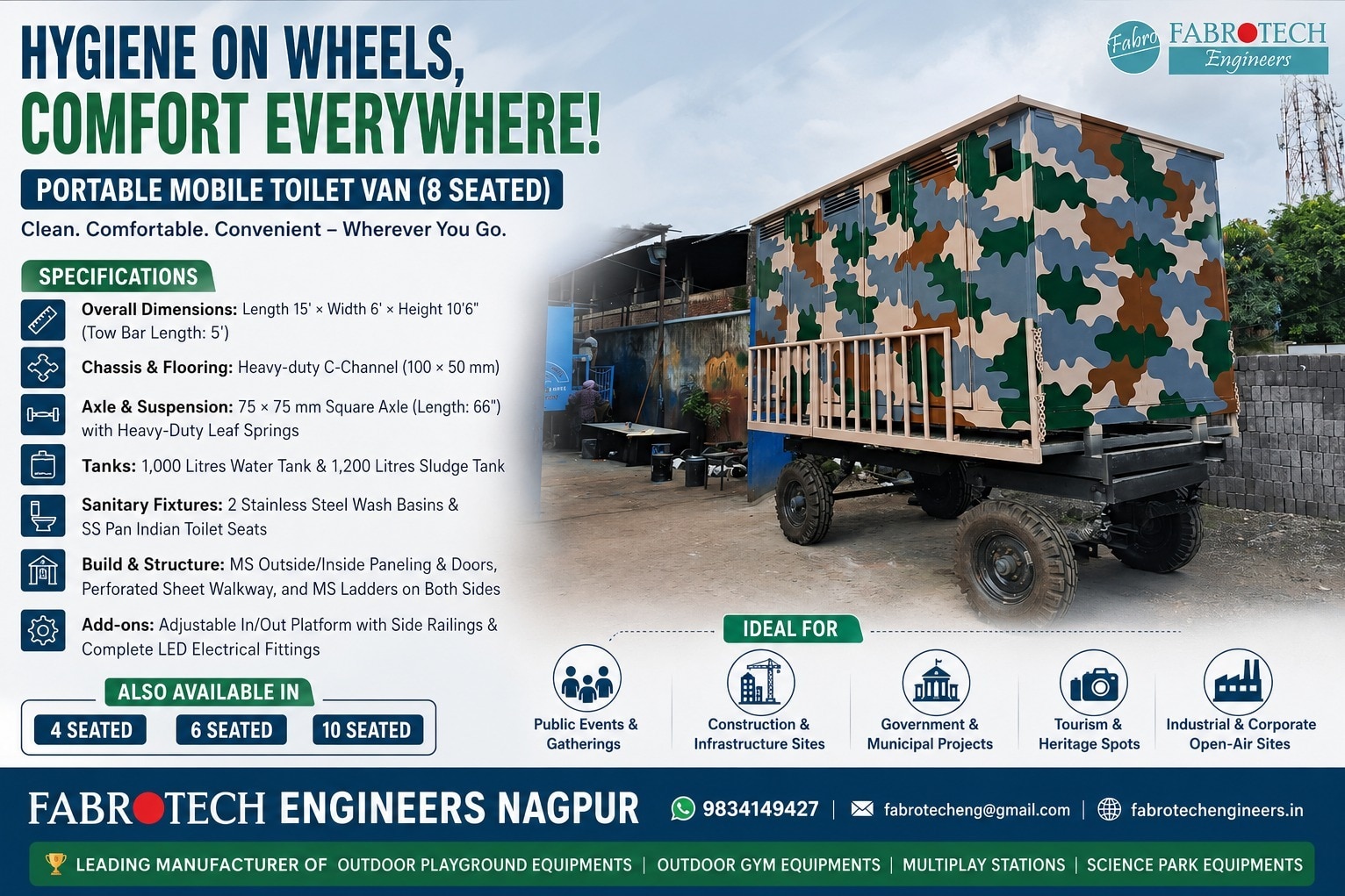
| Trailer-mounted unit | A site that must move | Towing route, ground conditions and stabilisation |
| Luxury restroom trailer | Weddings or corporate events | Interior finish, climate control and separate wash stations |
| Existing public facilities | Nearby toilets with spare capacity | Opening hours, accessible route, capacity and maintenance standard |
Make the portable toilet decision by comparing duration, peak demand, plumbing access, service-vehicle access, privacy, weather protection and operating cost. A simple unit suits a brief work phase; a towable arrangement suits a mobile site.
A permanent washroom becomes more practical when recurring pumping, lighting, winter protection and truck access will continue for months or years.
For U.S. construction sites, OSHA requires one toilet for 20 or fewer employees, one toilet seat and one urinal per 40 workers from 20 to 200, and one toilet seat and one urinal per 50 workers at 200 or more. Place facilities within one-quarter mile walking distance.
UK projects should check HSE welfare guidance, which permits alternatives to mains-connected flushing toilets where mains drainage is not reasonably practicable.
How many toilet seats should your event or worksite provide?
Base portable toilet quantity on the maximum people present at one time, not tickets sold. Record attendance, event duration, arrival and departure waves, worker count, women-to-men ratio, children, alcohol service and food service. Alcohol and long events increase demand; food service increases handwashing demand and queue pressure.
For a short event, one toilet per 50 attendees is a common event toilet calculation heuristic, not a universal legal requirement. Confirm the count with the local health department, fire authority, permit office or alcohol-service authority.
Test peak demand during the busiest 15- to 30-minute period, then add seats if queues would block entrances, food service or emergency routes. Larger tanks do not replace seats; separate high-throughput urinal units can reduce waiting more effectively.
Use these starting points:
| Use case | Count basis | Action |
|---|---|---|
| Event | Maximum simultaneous attendance and peak demand | Adjust for duration, alcohol, children, food service and queues |
| Construction site toilets | Largest shift plus subcontractors, visitors and staggered crews | Apply OSHA thresholds: one toilet for 20 or fewer employees; one toilet seat and one urinal per 40 workers from 20 to 200; one seat and one urinal per 50 workers at 200 or more |
Place construction units within a one-quarter-mile walking distance. Where U.S. ADA obligations apply, provide at least one accessible toilet and confirm whether local rules require more. A permit authority may require additional accessible units for crowd size.
How do tank size, cleaning and pumping determine usable capacity?
A 200-, 500-, 600- or 1,000-litre portable toilet tank capacity is gross capacity, not the number of uses you can safely schedule. Ask for the usable fill limit, reserve capacity and pumping trigger before accepting a servicing interval.
1. Obtain the flush volume or water use per visit and the waste volume per visit. Divide usable litres by the agreed litres consumed per use, then reduce the result for peak occupancy, spills, sludge, paper and a safety reserve. Tank size alone cannot produce a reliable interval.
2. Put waste tank servicing in writing. Name who supplies potable water, soap, paper and bags; who cleans and deodorises; who pumps; the maximum response time for a full tank; and the documented disposal destination.
3. Set the portable toilet cleaning schedule around use. Inspect before opening, during the event and at close. Construction sites need a recurring route matched to the largest shift; multi-day events need pre-opening cleaning, daily replenishment and a documented final pump. Public areas need frequency based on footfall and complaints.
4. Confirm vacuum truck access before delivery. Provide a firm route, hose reach, truck turning space and overhead clearance without crossing queues, food areas or play spaces.
5. Use an authorised provider and never discharge contents to a storm drain, surface water or improvised pit. OSHA construction facilities must remain clean and sanitary, while handwashing with potable water, cleansing agent and towels or air blowers is a separate requirement from toilet servicing.
What site conditions make delivery, towing and daily servicing workable?
Choose firm, level ground away from flood paths and standing water. For reliable mobile toilet site selection, map every movement from the delivery vehicle to the final portable toilet placement, including the vacuum truck’s route.
| Check | Why it matters | Confirm before booking |
|---|---|---|
| Towing vehicle and hitch | Prevents an overloaded or incompatible tow | Rated capacity and hitch arrangement |
| Route and parking | Avoids a failed delivery | Road or parking permissions, width, turning radius and reversing space |
| Site structure | Prevents damage or instability | Axle loading, overhead clearance and slope |
| Toilet service access | Allows pumping and cleaning without crossing sensitive areas | Vehicle route, hose reach and working clearance |
After placement, apply wheel chocks and engage stabilisers or support legs. Prevent movement on slopes. Ask whether the unit needs mains water, a filled tank, electricity, an onboard pump or an approved wastewater connection.
Keep wastewater out of drains. Route servicing away from food-preparation zones, play areas, pedestrian queues and emergency access. Place units in shade where possible, add non-glare lighting for evening use, and maintain a clear route to handwashing facilities.
For towable toilet deployment over several days, record who will disconnect water and waste, secure doors and tanks, obtain road permission, and reinstate the service route after relocation.
Fabrotech Engineers is one supplier to question, but compare its drawings with your site plan and request operating clearances, connection points, stabilisation instructions and maintenance responsibility in writing.
Related products
 | MOBILE TOILET MANUFACTURE ₹44000 Size: L-3’, W-3’,H-9.5’ Single Seated Portable Toilet Made by MS Sheet 18 Guage Steel Body with Indian toilet(S.S Pan) seats, 200 Ltrs, Sludge Tank... View product → |
 | MOBILE TOILET MANUFACTURE ₹80000 Size L -6’, W -3’, H – 9.5’ Portable Toilet Made by MS Sheet 18 Guage Steel Body with Indian toilet(S.S Pan) seats, 500 Ltrs, Sludge Tank made by FRP... View product → |
What accessibility, hygiene and privacy features must be checked before opening?
An ADA accessible portable toilet is not established by a ramp. Under the 2010 ADA Standards, verify the interior, route and operating force before accepting the unit.
1. Measure a 60-inch turning circle or equivalent T-shaped space. Check a firm, stable, slip-resistant route, door clearance and maneuvering space, grab bars, and a water-closet seat height of 17 to 19 inches.
2. Confirm door force, threshold height, ramp slope, landing dimensions and transfer clearance against the applicable accessibility rules. Ask for internal dimensions plus photographs or drawings of the accessible model; standard configurations do not prove disability suitability.
3. At construction washing facilities, provide potable water, cleansing agent and towels or air blowers. Hand sanitizer alone is not OSHA’s equivalent where washing facilities are required. Verify portable toilet handwashing supplies before workers arrive.
4. Check toilet ventilation and odour control, soap, paper, sanitary-product disposal, waste bins, internal locks, external lighting, privacy screening and child-safe latches. Test every lock, light, tap and dispenser, then record replenishment in a log with a named attendant or service contractor.
5. For public areas, inspect after peak periods. Remove the unit immediately if its floor is unstable, the tank is full, the door will not lock or supplies are missing. Good portable toilet privacy requires a working lock, intact screening and lighting that does not expose the interior.
These checks establish genuine usability, not mere presence.
Frequently asked questions
When does a portable toilet make more sense than a permanent or existing facility?
Choose a portable toilet when occupancy is temporary, excavation or sewer connection would delay work, or existing toilets are too far from users. Common examples include construction phases, seasonal recreation areas, road closures and event compounds.
How many toilet seats should an event or worksite provide?
Calculate provision from peak attendance or workforce size, the operating hours, event duration and expected toilet use. Increase the quantity when alcohol is served, queues would disrupt the site or workers cannot leave their work area easily.
How do tank size, cleaning and pumping determine usable capacity?
Tank capacity limits use between service visits, not just the number of people on site. Set a cleaning and pumping schedule from expected daily demand, then confirm that service vehicles can reach the units without disrupting users.
What site conditions make delivery, towing and daily servicing workable?
Provide a firm, level placement area, a clear delivery route, enough turning space and an unobstructed approach for the service vehicle. Keep units away from flood-prone ground, unstable edges and locations that block emergency access.
What accessibility, hygiene and privacy features must be checked before opening?
Check for a level approach, adequate internal turning space, a usable door, privacy locks, ventilation, handwashing facilities, soap, water, waste bins and a cleaning condition that is acceptable before users arrive.
Related products
 | MOBILE TOILET MANUFACTURE ₹120000 Size: L-9’, W-3’,H-9.5’ Single Seated Portable Toilet Made by MS Sheet 18 Guage Steel Body with Indian toilet(S.S Pan) seats, 500 Ltrs, Sludge Tank... View product → |
 | MOBILE TOILET MANUFACTURE ₹190000 Size L -9’, W -3’, H – 9.5’ Length of Toe 5’, Chassis made of C Chanel 100 x 50 mm, Floor made of C Chanel 100x50mm , Axle 75 x 75 mm sqr. View product → |
 | MOBILE TOILET MANUFACTURE ₹320000 Size L -15', W -6', H - 10'.5” , Length of Toe 5', Chassis made of C Chanel 100 x 50 mm, Floor made of C Chanel 100x50mm, Axle 75 x 75 mm sqr. View product → |
 | MOBILE TOILET MANUFACTURE E Garbage Cart – Eco-Friendly Waste Collection Solution The E Garbage Cart from Fabrotech Engineers is an eco-friendly and efficient solution designed for modern waste collection needs. View product → |